

3.1 km Under the Canal: Panama’s Line 3 Tunnel Reaches Balboa
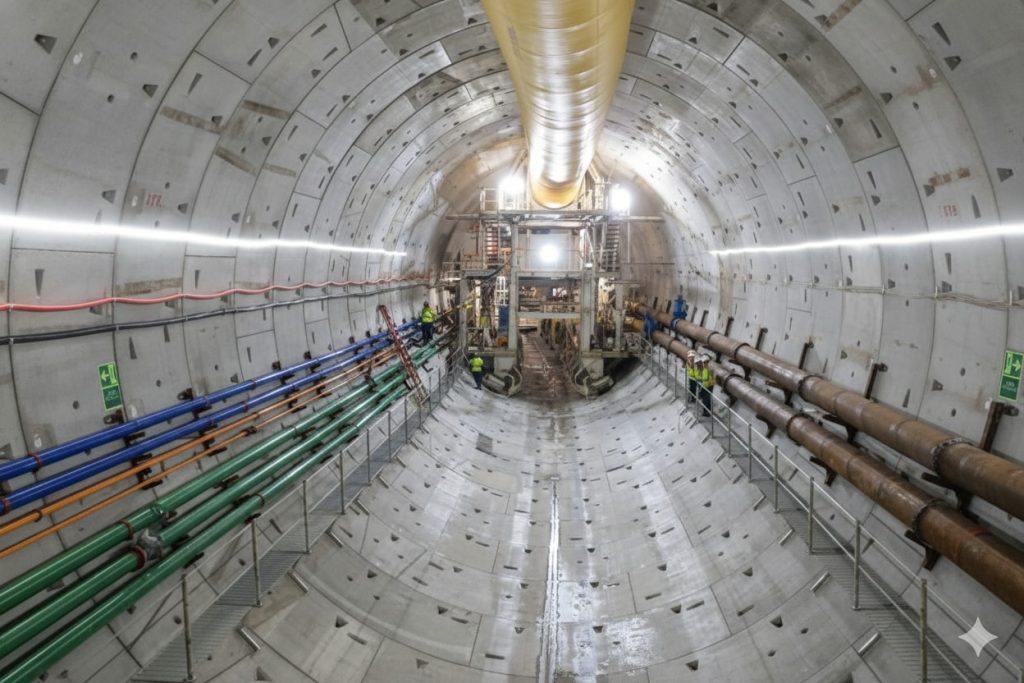
A tunnel boring machine (TBM) known as Panama has completed the first major underground crossing for Metro Line 3, passing beneath the Panama Canal and arriving at the evacuation shaft in Balboa. The milestone was marked on site alongside President Jose Raul Mulino.
What was completed
Since starting operations in September 2024 from the Farfan area, the TBM excavated 3.1 kilometers of tunnel, installed 1,560 concrete rings, and removed more than 800,000 cubic meters of material – a volume often compared to roughly 320 Olympic swimming pools.
The crossing is also notable for its depth. Reporting around the project indicates the machine reached about 65 meters below the Canal during the drive, underscoring the technical complexity of tunneling in a high-stakes corridor with challenging ground conditions.
Why the 3-month pause matters
With the first section complete, the TBM is scheduled for roughly three months of maintenance in Balboa. The planned work includes visual inspections, mechanical reviews of major components, electrical system checks, and more specialized tasks such as servicing the cutterhead, reviewing welds and key mechanical parts, and changing oil in critical areas. Materials and equipment used in Farfan are also being transferred to Balboa to support this phase.
This kind of stop is typical in large tunnel drives. It is a controlled reset designed to reduce risk before the machine begins the next stretch.
What comes next for Line 3
After maintenance, the TBM is expected to continue for an estimated final 1.5 kilometers toward the Albrook area, where it would ultimately be removed once the drive is completed. In parallel, work inside the already-excavated tunnel continues, including alignment checks and the installation of internal structural bases and support elements that will later carry the system.
Line 3 is intended to improve the daily cross-city connection between Panama Oeste and Panama City, serving a large commuter population that currently faces long travel times.
Local geography people will recognize
This tunnel effort is tied to the corridor connecting areas like Panama Pacifico on the west side and the broader Albrook hub area in Panama City, plus the growing residential zones of Panama Oeste such as Arraijan. These names matter because they are where the daily mobility pressure is felt most.
A brief note on accessibility, including real estate
Even without making this a real estate story, stronger cross-Canal connectivity generally means more predictable access between where people live and where they work or study. Over time, that kind of reliability can make housing options across the corridor feel more accessible for everyday buyers and renters, simply because the commute becomes a less intimidating variable.
If you want help understanding Panama’s different regions and communities, Casa Solution Real Estate is available to guide you with local, on-the-ground insight. WhatsApp: +507 68241334.
Date written: February 8, 2026