

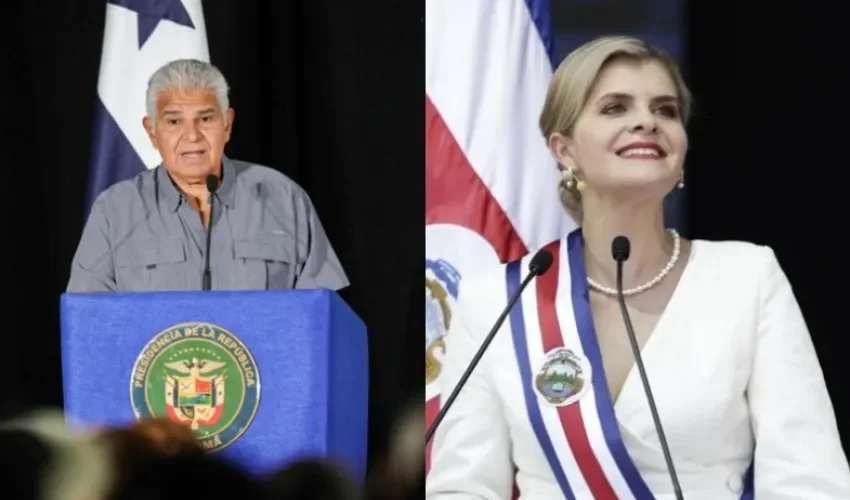
Panama and Costa Rica, long viewed as close Central American neighbors with strong commercial and diplomatic ties, are facing a new period of friction after Panama paused the sale of electricity to Costa Rica. The move follows renewed criticism from Costa Rica’s newly sworn-in president, Laura Fernández, over Panama’s restrictions on certain Costa Rican agricultural goods. Fernández took office on May 8, 2026, becoming Costa Rica’s second female president.
The dispute is not new. Since 2019 and 2020, Panama has maintained restrictions on several Costa Rican agricultural and food products, including dairy, meat, bananas, plantains, pineapples and strawberries. Costa Rica argues that these measures unfairly limit access to the Panamanian market, while Panama has defended its position by pointing to sanitary, phytosanitary and regulatory concerns tied to protecting local producers and national industry.
Costa Rica Raises the Tone
President Fernández recently said the issue would become a priority for her administration and announced that Costa Rica would pursue diplomatic and international actions. She said the matter had moved beyond regular trade channels and would be handled directly by Costa Rica’s foreign minister, Manuel Tovar. Costa Rica also points to a 2024 World Trade Organization panel ruling that favored its position, although Panama appealed that decision in January 2025.
From Panama’s side, the reaction has been firm. President José Raúl Mulino said that, for now, Panama would not proceed with additional electricity sales to Costa Rica. He framed the decision around reciprocity, suggesting that Panama should not be expected to assist Costa Rica in one area while facing pressure in another.
Why Electricity Matters
The power issue gives the trade dispute a broader regional dimension. Panama and Costa Rica are both part of the Central American Regional Electricity Market, which allows countries to buy and sell energy through regional interconnection systems. According to reporting cited by Costa Rican outlet El Financiero, Costa Rica imported 687.4 GWh of electricity from Panama in 2024.
However, Costa Rican authorities have stated that the country currently has enough electricity to meet national demand and that there is no immediate risk of rationing or blackouts. That limits the short-term impact, but the message from Panama is still politically significant.
How Far Could This Go?
At this stage, the dispute appears more likely to remain a diplomatic, commercial and legal standoff rather than develop into a major crisis. Panama and Costa Rica have too much shared interest in stability, border movement, tourism, regional trade and Central American cooperation for either country to benefit from a prolonged escalation.
Still, the tone matters. Costa Rica’s new administration appears willing to use stronger public language and international mechanisms to push the issue. Panama, under Mulino, is signaling that it will not simply absorb pressure without responding. That creates room for more political friction, especially if Costa Rica continues to frame the restrictions as a blockade and Panama continues to treat the matter as a question of sovereignty, health controls and protection of national producers.
For residents, businesses and investors, the most important takeaway is not panic, but awareness. Border provinces and cross-border commercial areas, including parts of Chiriqui, David and Puerto Armuelles, naturally pay closer attention to Panama-Costa Rica relations because trade, transport and regional commerce can influence local business confidence.
A Relationship Worth Preserving
Panama and Costa Rica have historically maintained a peaceful and practical relationship. Both countries benefit from cooperation, particularly in trade, tourism, energy, security and regional connectivity. The current disagreement is important, but it should be seen in context: two neighboring countries defending their domestic interests while still operating within diplomatic and international frameworks.
For Panama, the challenge is to protect local producers without appearing closed to fair trade. For Costa Rica, the challenge is to defend its exporters without turning a technical trade dispute into a broader political confrontation. The best outcome would likely be a negotiated path that respects Panama’s regulatory concerns while giving Costa Rican producers a clearer process for market access.
Casa Solution continues to follow national developments that matter to residents, expats, investors and businesses across Panama. For guidance on living, investing or relocating in Panama, contact Casa Solution Real Estate for local, experienced support.
Date written: May 24, 2026