


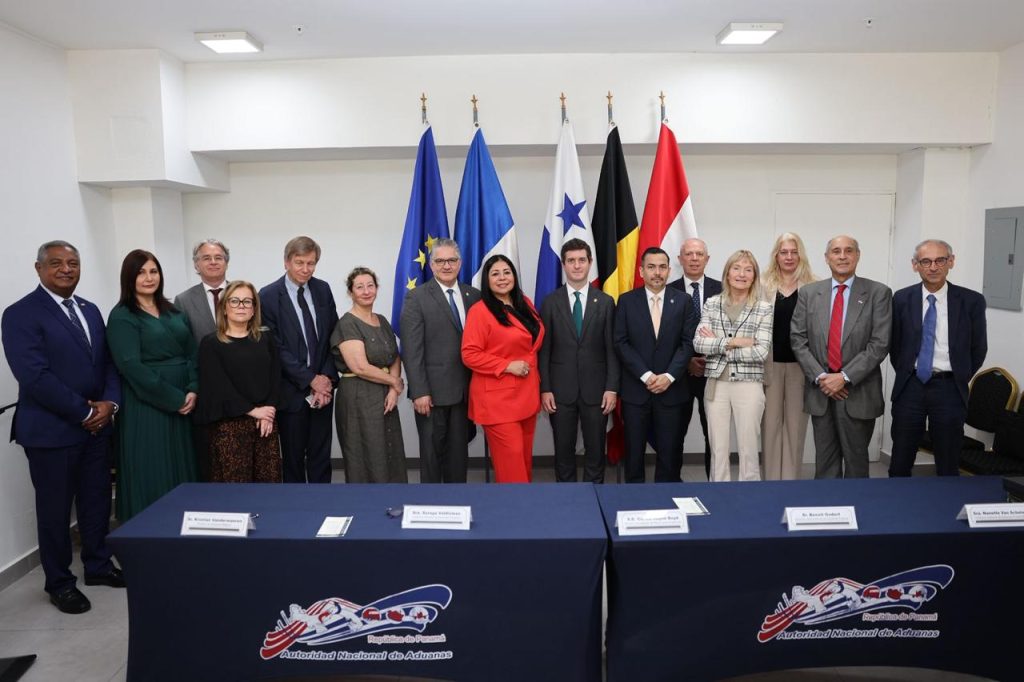
Panama Strengthens Customs Cooperation With Europe to Combat Drug Trafficking
Panama is tightening its grip on what moves through its ports. This week, the country formalized new customs cooperation with major European partners to strengthen intelligence sharing and disrupt international drug trafficking routes linked to global trade.
On December 9, customs officials from Panama, Belgium, France, and the Netherlands signed a joint declaration in Panama City aimed at expanding the exchange of operational intelligence, risk analysis, and enforcement experience to combat narcotrafficking and other forms of illicit trade.
The agreement reflects growing international confidence in Panama’s customs and security institutions. Senior customs officials from the three European countries traveled to Panama in person for the signing, underscoring the strategic importance of the country in global trade routes and security efforts.
According to Panama’s Director General of Customs, Soraya Valdivieso, the declaration formalizes a shared commitment to work collectively against illegal commerce and reinforces Panama’s role in promoting secure and transparent trade flows.
Focus on Intelligence, Ports, and Smuggling Detection
The cooperation framework prioritizes several key areas, including:
-
Real-time intelligence and information sharing
-
Enhanced risk analysis for cargo inspections
-
Improved coordination between port and customs authorities
-
Joint training programs and technical capacity building
-
Detection of increasingly sophisticated smuggling methods
Given Panama’s position as a major maritime crossroads, customs authorities emphasized the importance of unified international responses to dismantle transnational trafficking networks before illegal goods reach their final destinations.
European and Panamanian representatives highlighted that no country can effectively confront global drug trafficking alone. Faster information flows, coordinated inspections, and joint investigations are viewed as essential tools in disrupting criminal supply chains.
A Broader Security Signal
The signing ceremony was attended by senior Panamanian officials from foreign affairs, national security, the maritime authority, and the public prosecutor’s office, reflecting a whole-of-government approach to border control and anti-trafficking efforts.
Beyond its immediate operational impact, the agreement sends a clear signal that Panama is actively tightening oversight of what enters and exits its territory. Strengthened customs cooperation is increasingly seen as a frontline defense not only against drugs, but also against broader illicit trade activities that undermine regional and international security.
As trafficking networks evolve and adapt, Panama’s strategy appears to be centered on cooperation, intelligence, and accountability rather than isolated enforcement actions.
Article written on: December 14, 2025