


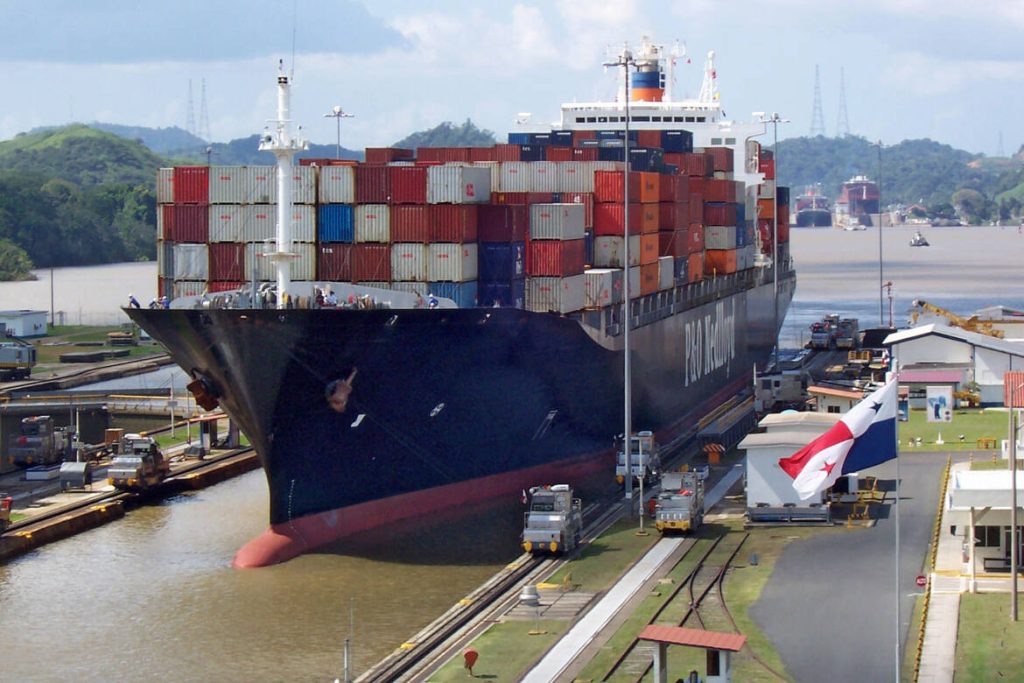
Some companies are paying unusually high amounts to secure last-minute transit through the Panama Canal, with recent auction bids reaching up to $4 million for a crossing slot.
The Panama Canal Authority has clarified that these payments are not part of a fixed toll or standard tariff. Instead, they are the result of the Canal’s auction system, where vessels without prior reservations can bid for limited available transit slots when demand is high.
Why Some Ships Are Paying Millions
The spike comes as global shipping routes face added pressure from geopolitical tensions, especially in the Middle East. With uncertainty around key maritime corridors such as the Strait of Hormuz, some companies are looking for faster or safer alternatives for moving cargo between oceans.
For most ships, the Canal remains far less expensive than the headline-grabbing auction figures suggest. Recent reports indicate that average auction prices moved from roughly $135,000 to $140,000 earlier in the fiscal year to about $385,000 during the recent demand surge. However, a small number of urgent cases have gone much higher, including a reported $4 million payment linked to a liquefied petroleum gas vessel.
The Canal has emphasized that these high bids reflect market conditions, not a new pricing policy. In simple terms, companies are paying extra when time is worth more than money, especially for energy cargo tied to strict delivery windows.
How Busy Is the Panama Canal Right Now?
Traffic through the Canal has been rising. During the first half of fiscal year 2026, from October 2025 through March 2026, the Panama Canal recorded 6,288 vessel transits, an increase of 224 transits compared with the same period a year earlier. Cargo volume also rose to 254 million PC/UMS tons, about 5% higher than the prior year period.
Daily traffic has also increased. The Canal reported an average of 34 daily transits in January and 37 in March, with peak days exceeding 40 transits.
According to the Canal, most vessels still move through the normal reservation system. The large auction payments are concentrated among a relatively small group of ships arriving without reservations or needing urgent passage.
Not a Canal-Wide Price Increase
One important point for readers is that the $4 million figure should not be understood as the normal cost of crossing the Canal.
The Panama Canal uses a combination of tolls, booking systems and auctions. The multimillion-dollar figures are tied to special circumstances in the auction market, where shipping companies compete for limited short-notice slots. The Authority has pushed back on the idea that these are ordinary fees or signs of a general price increase.
This distinction matters because the Canal’s pricing is closely watched by global trade, energy companies and logistics operators. A few extreme bids can make headlines, but they do not necessarily represent what most vessels are paying.
Why the Panama Canal Still Matters
The Panama Canal remains one of the world’s most important trade routes, linking the Atlantic and Pacific oceans through an 82-kilometer passage. It connects major shipping networks serving ports across the Americas, Asia and Europe.
The Canal is especially important for cargo moving to or from the United States, which remains its largest user. China and Japan are also among the major countries tied to Canal traffic.
The current surge highlights how quickly global shipping patterns can shift when conflict, fuel prices, freight rates or delivery deadlines change. For Panama, it also shows the strategic value of the Canal during moments of global uncertainty.
The Bottom Line
The recent $4 million auction payments are not normal Canal tolls, but they do show how valuable time can become in global shipping. When energy cargo, delivery deadlines and geopolitical risk overlap, some companies are willing to pay millions to secure faster passage.
For now, the Panama Canal says it is operating reliably, with rising traffic, stronger volumes and peak days above 40 transits. The main takeaway is not that every ship is suddenly paying millions, but that the Canal’s auction system is reflecting temporary pressure in global trade.
Article written on April 26, 2026.