


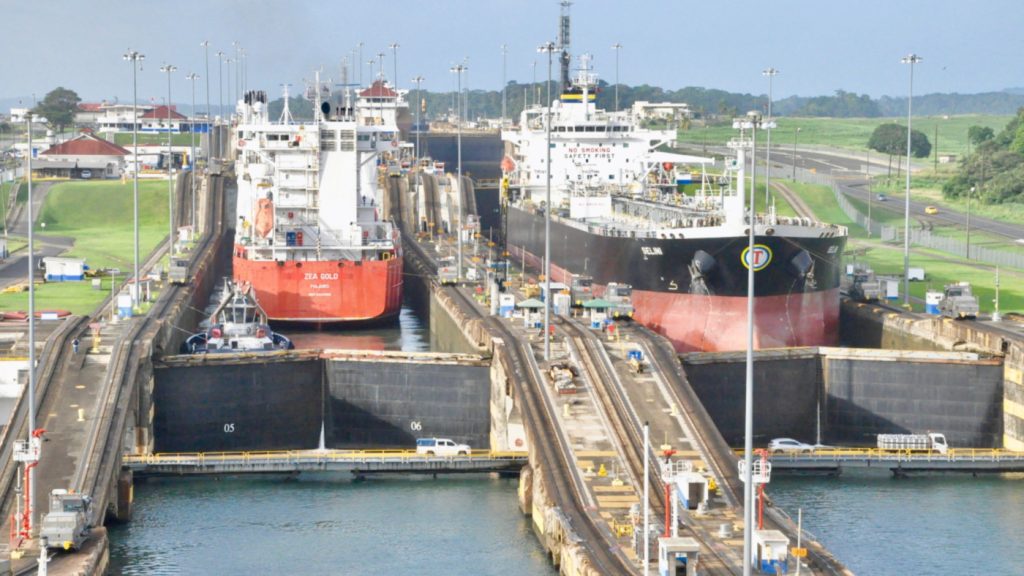
The Panama Canal transferred US$2.965 billion to Panama’s National Treasury for fiscal year 2025, reinforcing its role as one of the most important financial pillars of the Panamanian state. The contribution represents an increase of nearly US$500 million compared to the previous year, underscoring how canal operations directly translate into public funding at a national scale.
This transfer is not symbolic. It is cash generated by the daily service the Canal provides to global trade, and it flows straight into government accounts to support public spending across multiple sectors.
Where the Money Comes From
The total contribution is made up of three core components tied directly to Canal operations:
-
US$2.372 billion in operational surplus generated by the Canal
-
US$591 million from vessel tonnage fees
-
US$2 million from payments related to public services provided by the State
These figures correspond to the Canal’s fiscal year running from October 1, 2024 to September 30, 2025, following the approval of its financial statements by the Canal’s Board of Directors.
In practical terms, this means Panama’s government is benefiting directly from the efficiency, pricing power, and global relevance of the waterway.
Operational Recovery Boosted Revenues
One of the key factors behind the higher contribution was the recovery of water levels in the Canal’s lakes after the disruptions caused by the El Niño phenomenon the year before. With lake levels returning to normal, the Canal was able to maintain a 50-foot draft throughout the dry season.
As a result, average daily high-draft transits increased to 33 ships per day, up from 27 the previous year. That operational improvement allowed the Canal to handle more large vessels consistently, directly increasing revenue without expanding physical infrastructure.
This highlights an important point: even small changes in operating conditions can have outsized fiscal impacts for the country.
A Direct Impact on Public Finances
The funds delivered by the Canal go straight into the National Treasury and are used to finance government obligations and public projects. Unlike external loans or aid, this revenue is internally generated, recurring, and tied to a strategic national asset fully operated by Panamanians.
During the official ceremony in Colón, President José Raúl Mulino received the contribution from Canal employees, symbolically representing the Canal workforce’s role in sustaining national finances. Senior government officials and Canal administrators were also present, emphasizing the institutional importance of the transfer.
Why This Matters Beyond the Canal
At a macro level, this nearly US$3 billion injection strengthens fiscal stability, reduces pressure on public debt, and gives the government more room to operate without increasing taxes or borrowing. It also reinforces the Canal’s position not just as a trade route, but as a cornerstone of Panama’s economic sovereignty.
In short, every ship that transits the Canal contributes directly to the functioning of the Panamanian state. This year’s higher-than-expected transfer is a clear reminder that the Canal remains one of the most powerful financial engines behind government operations and public investment in Panama.