


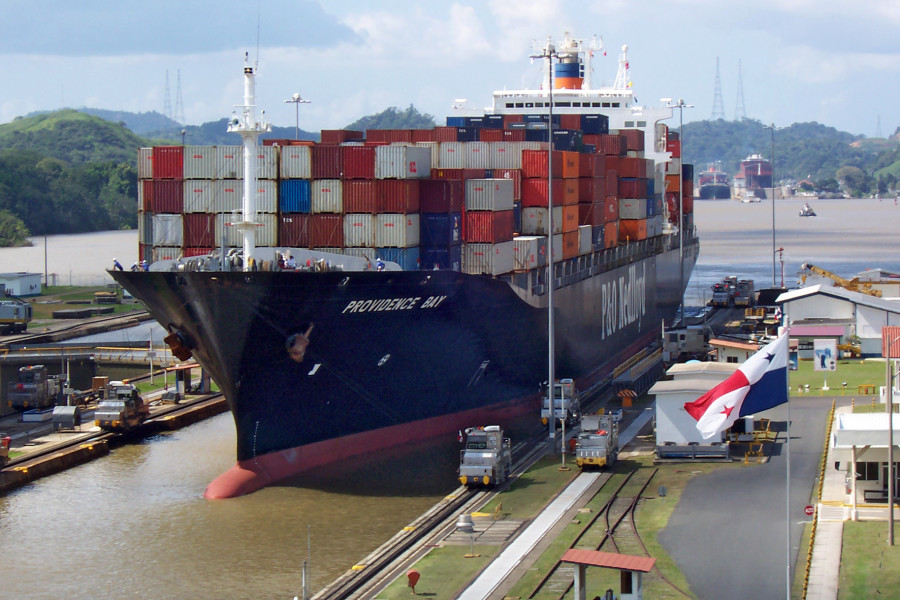
Since the transfer of its administration to Panama 26 years ago, the Panama Canal has delivered a cumulative $31.231 billion to the national treasury, underscoring its central role in financing public services and supporting long-term economic stability.
According to official figures released to mark the anniversary of the transfer on December 31, 1999, the most recent fiscal year stands out as a record. In fiscal year 2025 alone, the Canal contributed $2.965 billion to the government. These funds come from a combination of operating surpluses, transit fees, and payments for public services, all derived directly from Canal operations.
The transfer of the Canal was formalized under the Torrijos-Carter Treaties of 1977, which set the framework for Panama to assume full control after decades of administration by the United States. More than two decades later, Canal authorities describe the results as tangible and measurable, with direct effects on national competitiveness, logistics capacity, and social investment.
A Strategic Asset for Global Trade
The Canal currently serves 180 maritime routes, connecting 1,920 ports in 170 countries, and handles between 3 percent and 6 percent of global trade. Its largest users are the United States, China, and Japan, reflecting the waterway’s continuing relevance to the global supply chain.
One of the most significant milestones in its modern history was the opening of the expanded Canal on June 26, 2016. The addition of a third set of locks allows vessels carrying more than triple the cargo of those that could pass through the original locks. The expansion required nearly a decade of construction and an investment exceeding $5 billion, fundamentally reshaping the Canal’s capacity and revenue potential.
Investment Roadmap and Future Planning
In 2025, Canal authorities presented a $8.5 billion investment plan for the next decade. The roadmap focuses on reinforcing the Canal’s strategic role while addressing long-term operational needs. Planned projects include new port infrastructure, an energy corridor, and the construction of a new reservoir designed to secure the freshwater supply required for Canal operations.
Water management remains a defining challenge. Unlike any other major shipping route, the Panama Canal depends heavily on freshwater to operate its locks. As part of its sustainability strategy, the Canal has committed to improving water-use efficiency, reducing emissions, and strengthening resilience to climate variability.
Governance, Neutrality, and International Attention
The Canal operates under a Neutrality Treaty in force since 1979, signed by more than 40 states and territories. This framework guarantees open and non-discriminatory access to vessels from all nations, regardless of geopolitical tensions.
In 2025, the Canal once again drew international attention following public statements by Donald Trump, who alleged foreign influence over the waterway and called for preferential treatment of U.S. naval vessels. Panamanian authorities firmly rejected these claims, reiterating that the Canal remains under sovereign Panamanian control and governed by international law.
A Pillar of the National Economy
Beyond global trade, the Canal’s financial contributions directly support government budgets, infrastructure programs, and social spending across the country. Canal officials emphasize that its performance over the past 26 years reflects disciplined management, long-term planning, and a clear focus on sustainability.
As the Canal moves into its next decade under Panamanian administration, its role as a reliable revenue generator and strategic asset remains central to Panama’s economic model and its position in international commerce.