


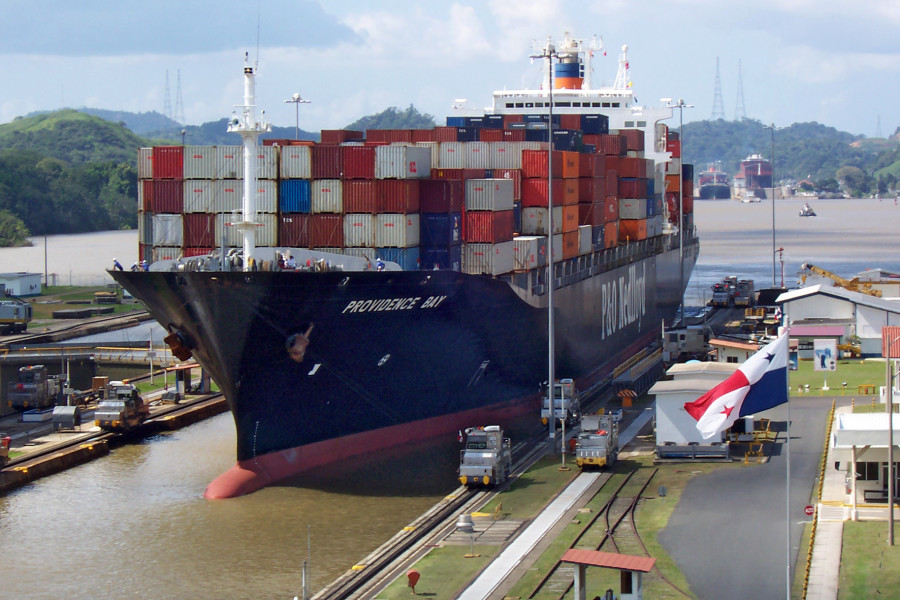
Panama Court Voids Canal Port Concession, Maersk Steps In to Keep Operations Running
Panama’s top court has ruled unconstitutional the long running concession that allowed Panama Ports Company, a subsidiary of CK Hutchison Holdings, to operate the Balboa and Cristobal container terminals at both ends of the Panama Canal. The decision immediately put one of the country’s most strategic assets back at the center of legal, political, and geopolitical attention.
What happens next – and why Maersk is involved
President Jose Raul Mulino said port operations will continue without disruption and that jobs are expected to be maintained during the transition. As the government structures a new concession, a local subsidiary of APM Terminals (part of Maersk) has indicated it is willing to temporarily manage the terminals to preserve continuity.
For most Panamanians, this interim change is not expected to mean a sudden shift on the docks. The workforce is already largely Panamanian, and day-to-day port operations typically run under established procedures regardless of the operator. The bigger question is not whether ships keep moving, but what the next contract will require and how the value created at these ports is shared.
Why the ruling matters beyond the ports
This case is being treated as more than a technical contract dispute. It is about whether Panama’s institutions can correct deals that many citizens and analysts have long described as poorly structured for the public interest.
Reporting around the ruling points to audits and official findings that alleged irregularities and unfavorable terms, including claims of major foregone revenue and questions about authorization tied to a previous extension. While public conversation often includes accusations of corruption around past concessions, those allegations are not the same as proven findings in court. What is clear is that the court has now provided a definitive legal break with the old framework, and the executive branch is moving to replace it.
The external pressure factor
The timing also sits inside a wider tug of war between United States and China over influence around strategic infrastructure and global trade routes. International coverage has framed the decision as aligned with US efforts to limit perceived Chinese linked influence in critical logistics nodes, while Chinese and Hong Kong officials have criticized the move. (Reuters)
For Panama, this is the balancing act: protect national sovereignty and legal credibility while keeping global commerce flowing and avoiding unnecessary shocks to investment confidence.
What the potential benefits look like in practice
If the transition is handled cleanly, the upside is straightforward:
- Clearer rules and stronger oversight: A reset creates an opportunity for more transparent concession terms, tighter reporting requirements, and clearer enforcement mechanisms.
- A better fiscal outcome for Panama: A new tender can be designed to better reflect market reality and public interest, potentially improving payments, fees, and compliance, which can support public budgets for infrastructure and services.
- A credibility signal: For residents and expats watching Panama’s institutional direction, a court driven correction can be read as rule of law asserting itself, not as the country being permanently available to the highest bidder.
At the same time, the benefits depend on execution. A stronger contract on paper only matters if the state enforces it consistently, audits it professionally, and resists political shortcuts when the next big negotiation arrives.
Article written: February 1, 2026