

Panama Raises Net-Metering Limits as Solar Prices Open More Remote Living Options
Panama’s public services regulator, ASEP, has issued a resolution increasing the maximum annual limits for electricity self-consumption from new, renewable, and clean sources. The updated caps raise the thresholds to 5% (GWh) and 16% (MW), up from the previous 4% and 13%. The change remains in effect through the end of the year, or until ASEP approves an amendment to the self-consumption procedure.
ASEP said the penetration of self-consumption has grown significantly in recent years and has been approaching the previously established limits. The new limits apply to customers connected to the distribution networks of Edechi, Edemet, and Ensa.
The Numbers Behind Panama’s Solar Self-Consumption Growth
ASEP data shows that, as of November, Panama had 7,064 self-consumption solar customers with a combined installed capacity of about 192 MW.
A breakdown by distribution company highlights where most of the installed capacity sits:
-
Edechi: 451 customers, about 11.8 MW installed (around 6.1% of the total installed capacity)
-
Edemet: 3,642 customers, about 90.9 MW installed (around 47.3%)
-
Ensa: 2,971 customers, about 89.6 MW installed (around 46.6%)
In short, most self-consumption capacity is concentrated in the Edemet and Ensa concession areas, with Edechi representing a smaller share.
Why This Matters More in 2026: Solar Costs and Remote Living
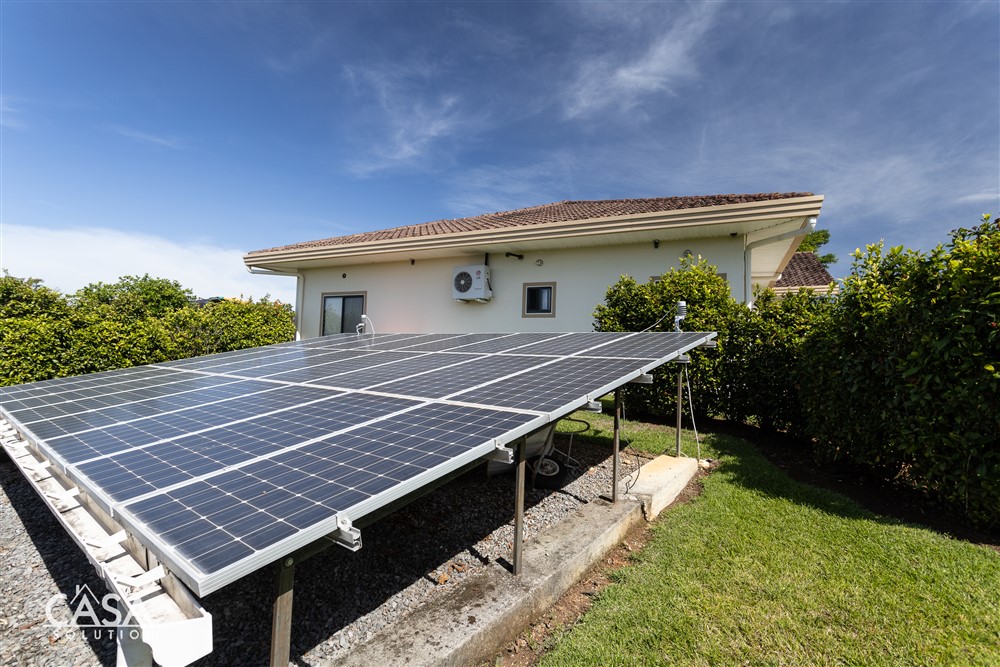
This regulatory adjustment lands at a time when solar has generally become more affordable and accessible, which is changing how people evaluate where to live in Panama. In areas where grid power can be inconsistent, slow to expand, or costly to extend, a properly designed solar system is increasingly being treated as a practical infrastructure choice rather than a luxury upgrade.
Naturgy and other providers can be reliable in many locations, but in some rural zones the overall experience (outages, response times, extension timelines, and voltage stability) still pushes residents and newcomers to compare the grid against solar-plus-battery solutions. As a result, more households are exploring quotes from the growing number of solar installers and service companies operating across the country.
For people planning a move – especially expats prioritizing quiet coastal or mountain lifestyles – the conversation is shifting from ‘Is off-grid possible?’ to ‘What system size and backup plan makes sense for my day-to-day needs?’
Practical Implications for Households and Buyers
If you are evaluating a home site outside major towns, this trend can affect your checklist:
-
Site selection becomes broader: Properties that were once considered ‘too remote’ may now be realistic if water access and road access are workable.
-
Budget planning changes: Solar can move from a future upgrade to a core line item, similar to water storage, internet solutions, or septic planning.
-
Resilience improves: Solar-plus-battery setups can reduce dependence on outages and help stabilize daily routines, especially for remote work.
This is part of why interest keeps growing in lifestyle markets like Cambutal and Mariato, Torio, Morrillo, where many buyers weigh self-sufficiency and lower-density living as part of the decision.
What This Could Mean for Residential Properties
This is not a guarantee of higher prices, but it can influence liquidity and buyer confidence in specific segments. Homes or lots that already have well-designed solar systems (or clear feasibility for installation) may be easier to position to buyers who want predictable monthly costs and fewer infrastructure unknowns. At the same time, buyers should still do due diligence on battery replacement cycles, inverter quality, and realistic load calculations, because system design matters as much as panels.
Closing Note
For residents, investors, and expats, ASEP’s move signals that self-consumption is no longer a niche category – it is a growing part of Panama’s energy mix, and it is increasingly relevant to everyday lifestyle planning.
If you would like help evaluating locations, access realities, and what to look for when a property advertises solar or off-grid potential, Casa Solution Real Estate can help you compare options and make an informed plan.
Date written: 2026-01-12