


Panama closed the first eleven months of 2025 with registered goods exports totaling USD 905.4 million, according to data released by the Ministry of Commerce and Industries (MICI). The figure represents an increase of USD 25.6 million, or 2.9%, compared to the same period in 2024, and stands as the highest export value recorded for January through November in the 2010–2025 period.
The results reflect steady external demand for Panamanian products and underline the role of exports as a stabilizing force within the national economy. While growth remains moderate, the consistency of performance across several sectors signals a broadly positive environment for producers, logistics operators, and related industries.
Key Export Products Drive Performance
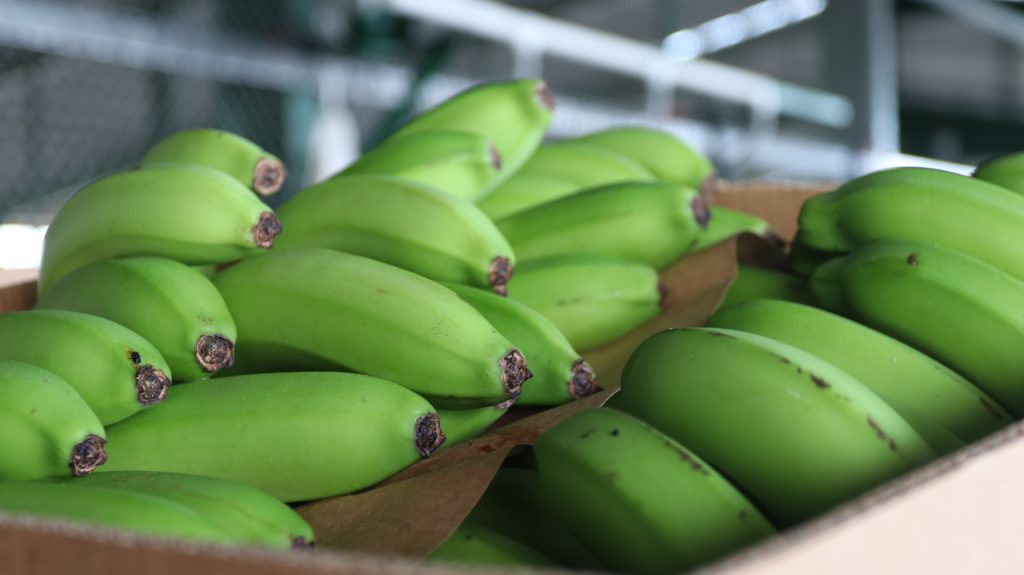
Frozen shrimp continued to lead Panama’s export portfolio, accounting for 13.0% of registered exports. Bananas followed with a 7.9% share, while crude palm oil contributed 7.2%. Together, the ten largest tariff subcategories represented 53.4% of total exports, highlighting the continued importance of agriculture, aquaculture, and agro-industrial goods in Panama’s trade profile.
Viewed by Harmonized System chapters, seafood products, particularly fish and crustaceans, dominated with a 21.8% share. Fruits represented 11.9%, followed by fats and oils at 10.2%. Other notable contributors included iron and steel products at 6.6%, prepared animal feed at 4.5%, and pharmaceutical products at 4.4%. This mix points to a gradually diversifying export basket that blends traditional commodities with higher value-added goods.
Export Destinations Remain Concentrated but Active
The United States maintained its position as Panama’s largest export destination, absorbing 15.0% of registered exports. Taiwan ranked second with 12.6%, followed by the Colon Free Zone at 7.9% and the Netherlands at 7.7%, a figure influenced by reduced banana shipments.
Additional markets such as China, Mexico, India, Costa Rica, Cuba, and Thailand remained active, with Thailand reentering the top ten destinations. Combined, these markets accounted for 69.5% of Panama’s registered exports, underscoring both the concentration and resilience of demand across multiple regions.
Total Exports Reach USD 1.19 Billion with Special Regimes
When exports from special regimes are included, total exports reached USD 1.193 billion between January and November 2025. This represents a 0.9% increase, or USD 8 million, compared to the same period last year. Registered exports accounted for USD 905.4 million, while value-added exports from special regimes contributed USD 288.0 million. The latter category experienced a 5.8% decline year over year, reflecting softer performance in some industrial zones.
MICI Minister Julio Molto noted that the figures reflect sustained effort by producers and exporters, along with continued market confidence in Panama. He emphasized that public policy remains focused on reducing barriers, leveraging trade agreements, and supporting employment and competitiveness across export-oriented sectors.
How This Impacts Local Regions and Property Markets
Export activity is closely tied to regional economies where agriculture, aquaculture, logistics, and processing facilities are located. Areas such as the Azuero Peninsula benefit from agricultural and livestock production, while highland regions like Boquete support fruit, coffee, and agro-industrial supply chains.
While export growth does not directly translate into immediate real estate price increases, sustained economic activity supports job stability, infrastructure investment, and long-term demand for housing near productive regions, ports, and transport corridors. For residents and expats, this typically means stronger local services and more resilient regional economies over time.
Looking Ahead
Panama’s export performance through November 2025 reflects a stable and diversified trade base, with room for further growth as global conditions evolve. Continued focus on value-added production and market access will remain key to maintaining momentum into 2026.