


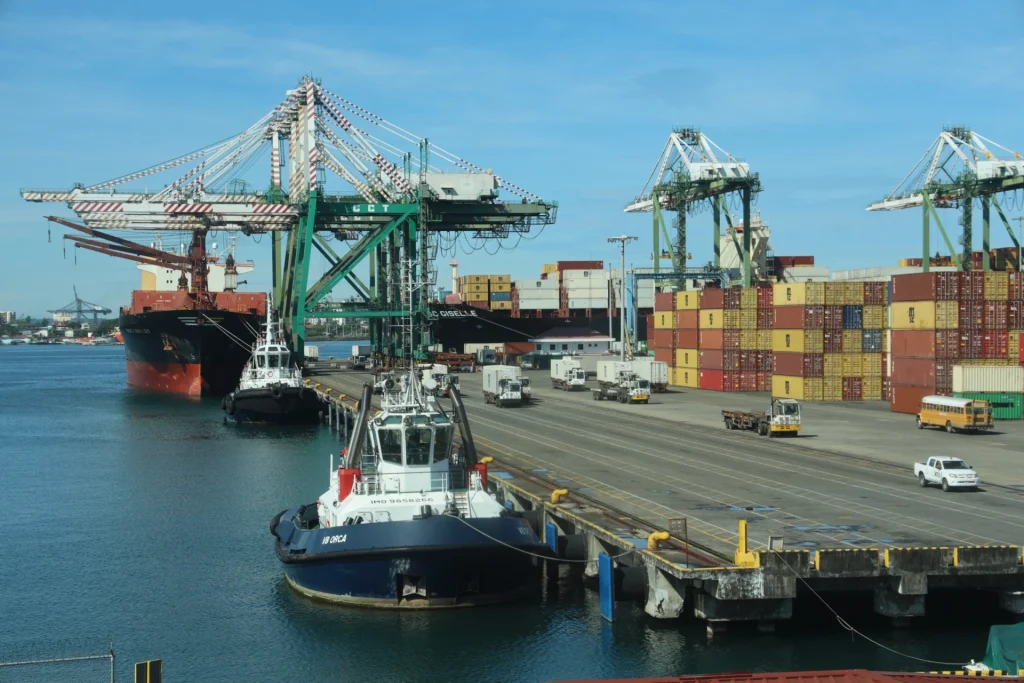
On February 23, 2026, the Government of Panama assumed control of the ports of Balboa and Cristóbal following a final ruling by the Supreme Court that declared the concession contract with Panama Ports Company unconstitutional. The decision was published in the Official Gazette, making it legally enforceable and immediately actionable.
The two ports, located at the Pacific and Atlantic entrances of the Panama Canal, handled 3.77 million containers in 2025, representing 38 percent of the country’s total port system activity. They are considered strategic assets within Panama’s logistics and maritime sector.
FAQ For A Quick Read
1) Why did Panama take control of the ports?
Because the Supreme Court ruled that the concession contract with Panama Ports Company was unconstitutional. Once the ruling was officially published, the government had to assume control to ensure the ports continued operating legally.
2) Is this an expropriation of the company’s assets?
No. The government has stated this is an administrative occupation to guarantee operations continue. The equipment and infrastructure remain the property of the company while the legal and transitional process unfolds.
3) Will port operations stop or be disrupted?
Authorities have said operations will continue normally. Temporary operators have been appointed for up to 18 months while a new long-term concession process is organized.
4) Is Panama in conflict with China?
There is diplomatic tension because the company involved is a subsidiary of a Hong Kong-based conglomerate. The company has initiated international arbitration. However, Panama has stated the decision is based on a judicial ruling, not a political move.
5) Could this affect Panama’s economy or investment climate?
The ports handle a significant portion of container traffic, so continuity is critical. If the transition remains orderly and legally structured, the impact may be limited. Investors will mainly watch operational stability, legal clarity, and how the new concession process is handled.
What Happened
The Supreme Court ruling nullified the concession held by Panama Ports Company, a subsidiary of Hong Kong-based CK Hutchison. The decision followed legal challenges filed by the Comptroller General, who argued that the contract was harmful to national interests.
After the ruling was formalized, the Panama Maritime Authority issued an occupation decree to guarantee continued operations. Authorities clarified that this is not an expropriation. The equipment and infrastructure remain the property of the company. The occupation allows the State to ensure uninterrupted port activity while a new structure is defined.
Former Canal Administrator Alberto Alemán Zubieta has been appointed to coordinate the transition. A temporary operating plan of up to 18 months has been approved while a new international selection process is prepared.
During this transition:
-
APM Terminals, part of Maersk, will manage the Pacific-side port of Balboa.
-
Terminal Investment Limited (TiL), affiliated with Mediterranean Shipping Company (MSC), will operate Cristóbal on the Atlantic side.
The Ministry of Labor confirmed that workers will maintain job stability and that no layoffs are expected during the transition.
International Reaction
CK Hutchison initiated arbitration proceedings at the International Chamber of Commerce in Paris. Company representatives indicated the claim could reach $2 billion.
Chinese officials stated they would take necessary measures to protect the interests of their companies. President José Raúl Mulino responded publicly that Panama remains an essential logistics route for global trade, including Chinese exports that transit through the Panama Canal and the Colón Free Zone.
The government has indicated it is open to dialogue while maintaining that the judicial ruling must be respected.
Governance and Institutional Signal
The publication of the ruling in the Official Gazette gave the decision full legal standing. Officials have framed the move as part of a broader effort to strengthen institutional oversight and review contracts considered unfavorable to national interests.
The transition plan includes:
-
Maintaining uninterrupted port operations
-
Protecting employment
-
Launching a new bidding process
-
Evaluating legal and arbitration scenarios
The objective, according to authorities, is to ensure that strategic infrastructure operates under terms aligned with national economic priorities.
Implications for Business and Property Markets
Panama’s economy is closely tied to maritime logistics, canal operations, and international trade. Any change involving major port terminals naturally draws attention from investors, logistics firms, and multinational corporations.
For property markets, stability in the logistics sector supports demand in several key regions, including:
-
Panama City, where port-related services, finance, and logistics companies are concentrated.
-
Colon Province, home to the Colón Free Zone and major Atlantic-side trade infrastructure.
If the transition remains orderly and operations continue without disruption, the move may be viewed as an institutional reset rather than an economic shock. Investors typically monitor three factors in situations like this: operational continuity, legal clarity, and long-term concession transparency.
So far, port activity continues under normal conditions.
A Structural Shift in Oversight
The takeover does not signal a withdrawal from international partnerships. Instead, it marks a shift in how concession agreements are reviewed and enforced. The government has stated that future operators will be selected through a process designed to protect national interests while maintaining Panama’s role as a global logistics hub.
The ports of Balboa and Cristóbal remain operational, cargo flows continue, and a new chapter in port governance is underway.
At Casa Solution, we monitor national developments that impact economic stability, infrastructure, and long-term investment confidence. If you are evaluating property opportunities in Panama City, Colón, or other logistics-driven markets, our team can provide on-the-ground insight to help you make informed decisions.
Written: March 1, 2026