


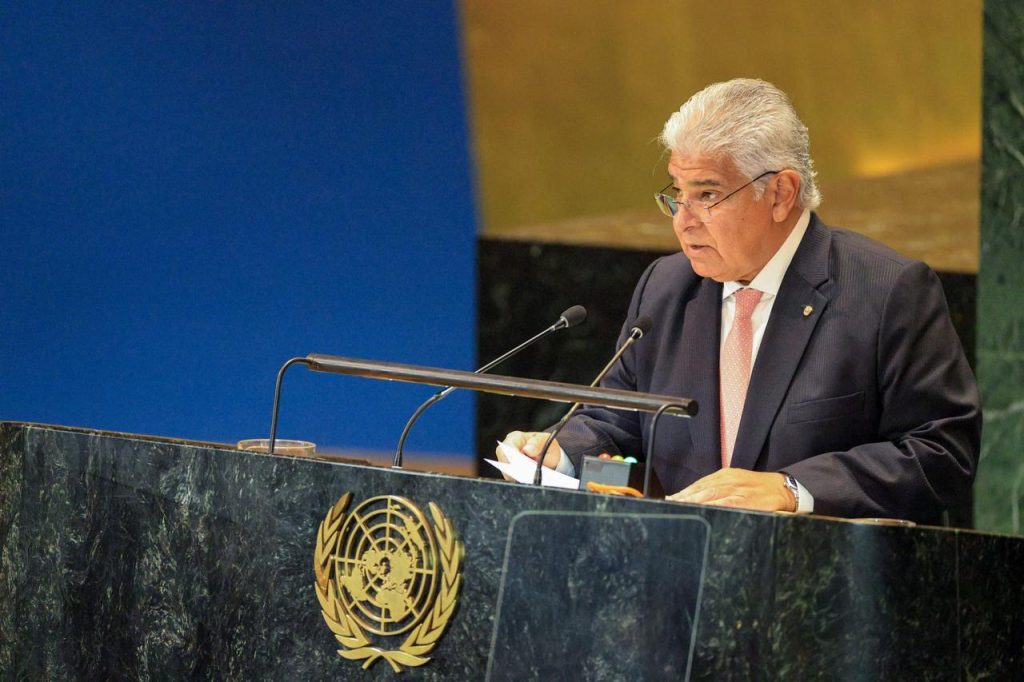
Panama’s president, Jose Raul Mulino, announced that companies headquartered in European Union member states will no longer be allowed to participate in Panamanian government procurement processes. The decision was communicated publicly after the EU kept Panama on its list of non-cooperative tax jurisdictions, a classification Panama considers discriminatory and harmful to its reputation.
Mulino said the government anticipated the outcome of this EU review and is now preparing for the next evaluation expected in October 2026. In his public statement, he instructed ministries and state entities to apply the restriction immediately going forward.
What is included and what is not
The measure is framed as a retaliatory trade action focused on public contracting, especially state-led infrastructure and public service projects. Local reporting describes it as a block on EU-based firms bidding for government projects, and as a barrier to European capital participation in those public works.
At the same time, coverage in Panama notes that the restriction is aimed at public tenders and does not automatically prevent European companies from making private investments in Panama outside of government procurement.
Aunque sabíamos que en esta revisión de la UE no se saldría de la lista y nos preparamos para la revisión de octubre, mantenemos la restricción de que ninguna empresa europea pueda licitar en nuestros proyectos de aquí en adelante. Así se lo he pedido a las distintas entidades.
— José Raúl Mulino (@JoseRaulMulino) February 17, 2026
Spain, Italy, and Greece are treated differently
Mulino also stated that Spain, Italy, and Greece do not include Panama on their own lists and, as a result, he considers them exceptions in this policy context. Panamanian media reported this as the basis for allowing companies linked to those countries to avoid the broader restriction.
Why the EU decision matters
The EU updates its tax cooperation list periodically. In the February 17, 2026 update, Panama remained listed among a group of jurisdictions the bloc considers non-cooperative for tax purposes. Reporting on the update also referenced ongoing EU concerns around transparency standards, tax fairness, and information exchange.
Investor and resident takeaways
For investors and residents, the most practical question is how this affects the pace and partners involved in public projects. Panama has been discussing major infrastructure initiatives where European firms have shown interest, including plans referenced in international coverage such as rail, port development, and other large-scale logistics works. If European bidders are excluded, procurement timelines and contractor lineups could shift toward non-EU groups. That can change scheduling and execution risk, even if the projects remain on the national agenda.
For expats and day-to-day residents, this announcement is not a change to property ownership rules, residency options, or private real estate transactions. It is primarily a government-to-government and government-to-contractor policy response, with the next meaningful milestone likely tied to the EU’s October review window.
Property market notes
If public infrastructure contracting slows or reshuffles, the effects tend to show up first in areas most tied to mobility, logistics, and public services. In Panama City, neighborhoods like Costa del Este and Avenida Balboa often track closely with broader infrastructure execution and investor sentiment because they concentrate business activity, rental demand, and high-density development.
This does not mean prices move automatically based on a single policy announcement, but it is a reminder that public works pipelines, contractor participation, and international perceptions can influence timelines and confidence, especially in urban markets where buyers value connectivity and predictable delivery of services.
Need help evaluating location-level risk in Panama?
Casa Solution Real Estate helps buyers and sellers make grounded decisions with local market context, comparable sales, and on-the-ground insight across Panama’s key regions. If you are planning a move, a purchase, or a long-term hold strategy, we are happy to help you map options and tradeoffs.
Date written: February 22, 2026