

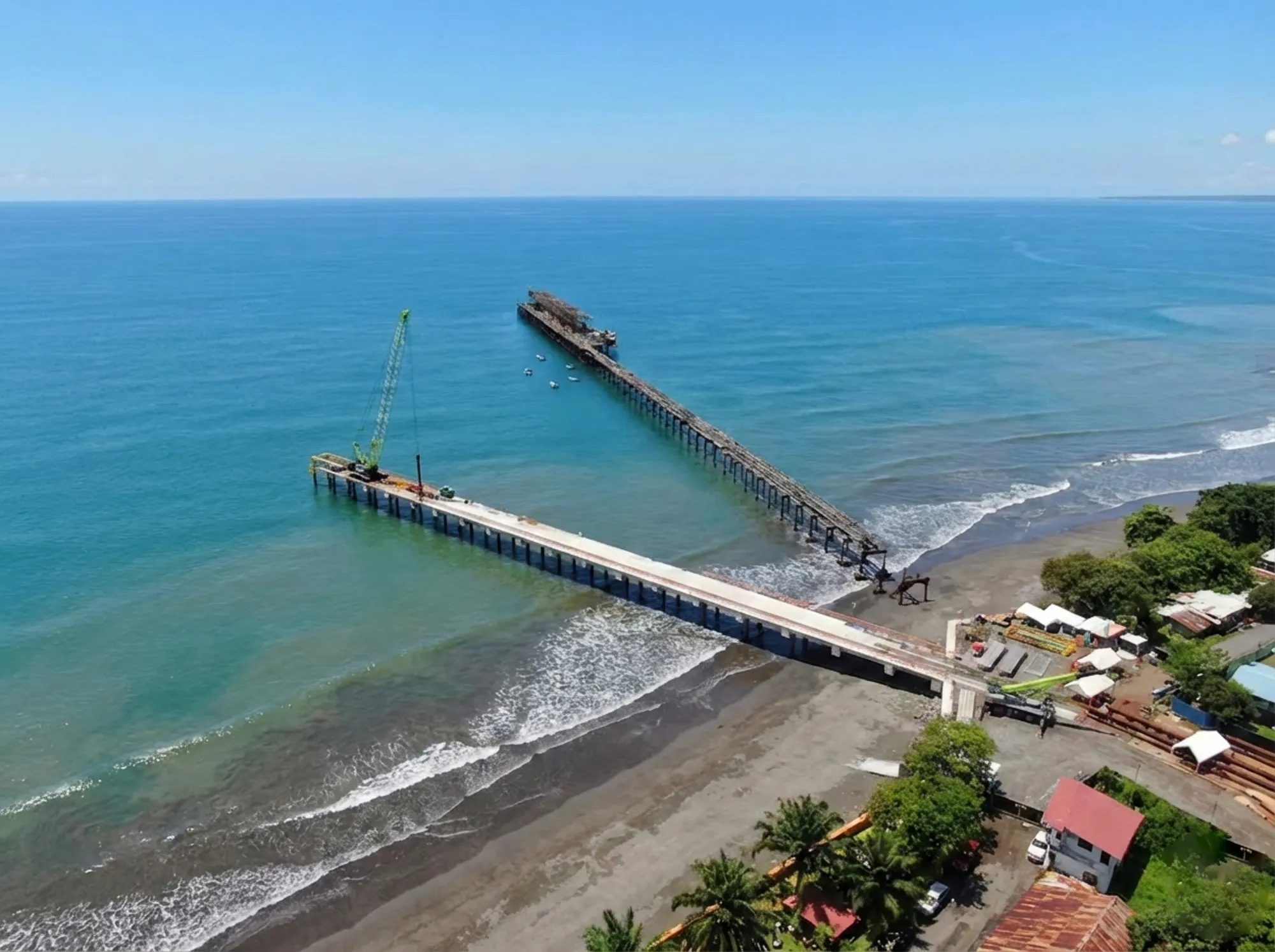
The development of the multipurpose port in Puerto Armuelles continues to take shape as one of the most significant logistics projects in western Panama. According to statements by President José Raúl Mulino, a group of Costa Rican business leaders has formally expressed interest in using the port as a platform for import and export operations. This interest adds to that of international maritime firms already evaluating the project.
The news, reported by La Prensa on January 15, 2026, highlights the growing regional relevance of the Puerto Armuelles port and its role within Panama’s broader logistics and economic strategy.
Project Progress and Key Stakeholders
According to official information, construction of the multipurpose port has reached approximately 65% completion, with operations scheduled to begin in July 2027. The interest from Costa Rican companies has been formally communicated to the Autoridad Marítima de Panamá, which is overseeing the project in coordination with the national government.
In addition, President Mulino confirmed that an international maritime company headquartered in Japan, considered among the most important global players in the sector, will participate in a logistics cabinet meeting planned for February in the Barú district. This follows a memorandum of understanding signed in September 2025 between the AMP and two Japanese maritime companies interested in contributing their technical expertise to the project.
The port infrastructure is designed to accommodate large vessels, including Panamax-class ships, significantly expanding cargo-handling capacity along Panama’s western Pacific coast.
Strategic Importance for Panama
The Puerto Armuelles multipurpose port has been conceived as more than a traditional docking facility. In addition to berthing areas, the project includes zones for storage, processing, and distribution of goods, as well as space for industrial activities and complementary services.
From an economic standpoint, the port aims to reduce logistics costs for producers in western Panama by bringing export infrastructure closer to agricultural and industrial zones in Chiriquí and Bocas del Toro. This is particularly relevant for agricultural products, industrial goods, and regional transit cargo that currently rely on more distant ports.
The interest from regional actors, such as Costa Rican businesses, suggests that Puerto Armuelles could play a broader role within Central American supply chains, reinforcing Panama’s position as a regional logistics hub beyond the Canal corridor.
Regional Context: Implications for Chiriquí and Western Panama
For the province of Chiriquí and the Barú district, the port represents an opportunity to diversify the local economy. Historically linked to agro-industrial activity, Puerto Armuelles is now positioned to incorporate logistics, transportation, services, and industrial operations into its economic base.
Projects of this scale typically generate direct employment once operational, as well as indirect jobs through related services such as land transport, warehousing, maintenance, trade, and technical support. Over time, they also tend to encourage complementary investments in infrastructure, including road networks, logistics parks, and public services.
In the medium term, the consolidation of Puerto Armuelles as a logistics center may contribute to greater economic stability in the region by reducing reliance on a single productive sector.
Connection to the Real Estate Market
From a real estate perspective, infrastructure developments of this nature do not result in immediate increases in property prices. However, they often produce gradual and sustained effects over time.
These impacts typically include steady demand for housing linked to new employment and economic activity, as well as increased interest in land suited for industrial, logistics, or service-oriented uses. Improved connectivity and infrastructure, which often follow large-scale projects, also influence long-term real estate decision-making.
In areas such as Barú, Puerto Armuelles, and southern Chiriquí, this type of development can support a more stable and diversified real estate market aligned with the region’s evolving economic profile.
Closing Note
The interest shown by Costa Rican businesses and international maritime companies in the Puerto Armuelles multipurpose port reflects a broader trend toward strengthening western Panama’s role in regional logistics. Beyond short-term activity, the project points to longer-term structural changes aimed at fostering more balanced and decentralized economic growth.
Understanding how infrastructure, logistics, and regional economic development intersect with the real estate market is increasingly important. Casa Solution advises buyers and investors interested in Chiriquí and other regions of Panama, providing guidance grounded in analysis, context, and long-term perspective.
Date written: 2026-01-17