

Panama Takes Another Step Toward International Transparency
Panama has approved a new economic substance law designed to show international authorities that companies registered in the country must have real activity, real operations, and real decision-making in Panama if they want to benefit from the country’s business platform.
The National Assembly approved Bill 641 of 2026 in its third debate. The law adds new rules to Panama’s Fiscal Code for multinational groups based in Panama that receive certain types of passive income from abroad, such as dividends, interest, royalties, capital gains, and other similar income.
What the New Law Is Trying to Fix
In simple terms, the law is aimed at separating real companies from so-called paper companies.
A paper company is a business that may be legally registered in a country but does not have real employees, offices, management, operations, or decision-making there. These types of companies have been a major concern for international tax authorities because they can be used to move income across borders without enough transparency.
Companies Must Show Real Activity in Panama
Under the new law, companies that cannot prove enough economic substance in Panama may have to pay a final 15% tax on the taxable net income connected to those foreign passive earnings.
To prove substance, companies would generally need to show that they have qualified staff, adequate facilities, strategic decisions being made in Panama, and real operating expenses in the country.
Why This Matters for Panama’s Reputation
This matters because Panama has been working proactively to improve its international reputation and remove itself from the European Union’s list of jurisdictions considered non-cooperative on tax matters.
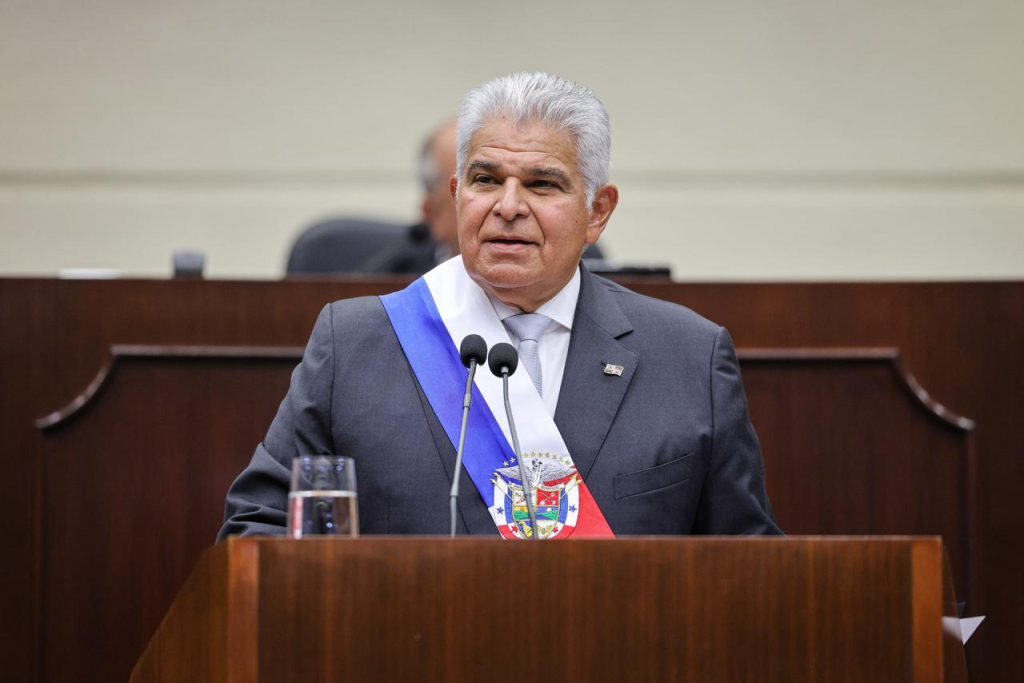
President Jose Raul Mulino said the new law should help Panama before European authorities, which are expected to review the country’s progress in upcoming evaluations.
The Ministry of Economy and Finance has also described the law as one of the most important steps requested by the European Union. According to government officials, if Panama’s reforms are accepted, the country could potentially leave the EU list in the next review, expected in October, or in a later review in February 2027.
Why the EU List Is Important
The importance of this goes beyond tax policy.
Being included on an EU list can affect how a country is perceived by banks, foreign investors, international companies, and financial institutions. Even when Panama has a strong dollarized economy, strategic location, and major logistics advantages, reputational issues can make international transactions more complicated and create unnecessary concern among outside investors.
Panama Is Acting Proactively
That is why this law is an important signal. Panama is not waiting passively for outside pressure. It is taking steps to align its rules with international standards, improve transparency, and show that the country wants business activity that is real, productive, and connected to the local economy.
The law also includes special treatment for income connected to intangible assets developed in Panama, such as patents, trademarks, and copyrights. This is intended to encourage innovation, technology development, and the creation of higher-value business activity inside the country.
Other Key Parts of the Law
Another key part of the law is that it includes mechanisms to avoid double taxation when taxes have already been paid abroad. It also excludes certain regulated sectors, such as the merchant marine and financial entities supervised by Panama’s banking, securities, and insurance regulators.
The law is expected to take effect starting in fiscal year 2027. The Executive Branch will have 90 days to issue the regulations needed to apply it.
The Bigger Picture for Panama
For everyday readers, the main point is simple: Panama is trying to make its corporate and tax system more transparent, more credible, and more aligned with global standards.
If successful, this could support stronger international confidence, better financial relationships, and a more stable business environment for the country.
For people living, working, or following Panama from areas such as Panama City or Boquete, this type of reform is part of a broader effort to protect the country’s image as a serious and internationally connected destination.
Casa Solution Can Help You Understand Panama
Casa Solution continues to follow important national developments that may affect life, investment confidence, and long-term planning in Panama. If you are considering Panama for relocation or property ownership, our team can help you understand the country with local experience and practical guidance.
Written on May 31, 2026.