


Panama Moves to Tighten Fiscal Controls
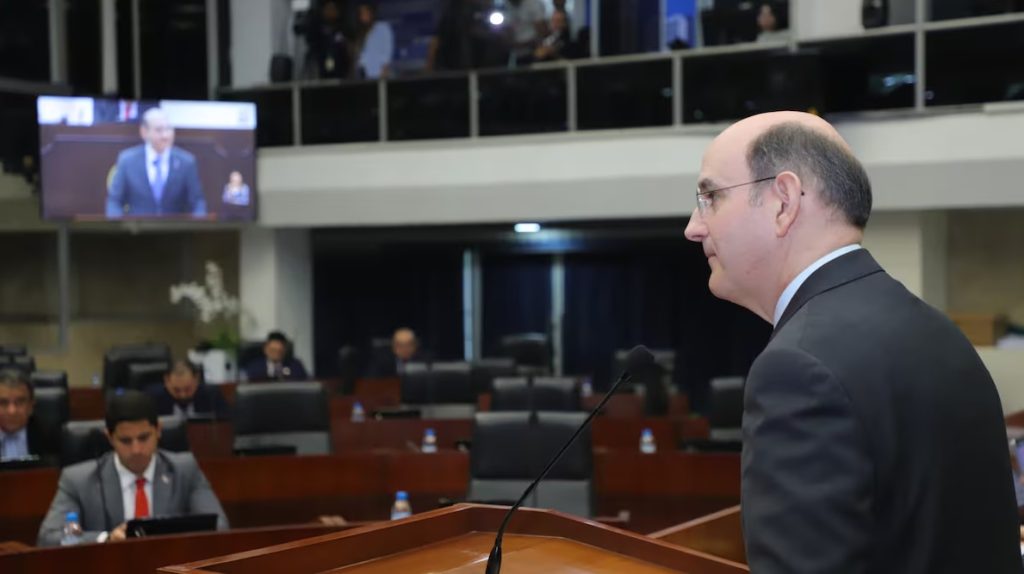
Panama’s Ministry of Economy and Finance has presented a reform to the Fiscal Code that would require certain international companies to prove they have real economic activity in the country. The proposal, introduced by Economy and Finance Minister Felipe Chapman before the National Assembly, is aimed at tightening tax controls and responding to long-standing international concerns about the use of Panama-based structures for tax avoidance.
What “Economic Substance” Means
The central concept in the bill is “economic substance.” In practical terms, this means that a company would need to demonstrate that it is not only registered in Panama, but also carrying out meaningful activity here.
That could include having qualified personnel, proper physical offices, strategic decision-making inside the country, and operating expenses connected to the income being generated.
Passive Income Under Review
The reform would create a new section in the Fiscal Code called “Economic Substance Rules for Passive Income.”
Passive income generally refers to income that does not require heavy day-to-day operations to produce. Examples include dividends, interest, royalties, capital gains, and rental income.
Under the proposal, entities that do not meet the required standards could be classified as “non-qualified entities.” Those companies would be subject to a 15% tax on gross income generated in Panama.
Not a General Tax Increase
This is not being presented as a general tax increase on all companies. According to the article and tax experts cited, the measure is mainly directed at multinational groups and international structures that receive passive income through Panama without showing enough real activity in the country.
The purpose is to reduce cases where companies benefit from Panama’s tax system while creating little or no economic value locally.
New Reporting Requirements
The bill also includes new reporting requirements. Companies would need to submit annual information related to passive income and economic substance.
It also proposes changes to the definition of “permanent establishment,” which could broaden the criteria used to determine when a foreign company is actually operating in Panama and should pay taxes here.
Panama’s International Reputation Is a Key Factor
A major reason behind the reform is Panama’s effort to improve its international tax reputation. The European Union still includes Panama on its list of non-cooperative tax jurisdictions.
Being on this list can create reputational challenges for the country, increase scrutiny of financial transactions, and affect the perception of Panama as a place to do business internationally.
Timing Matters for Panama
For Panama, the timing is important. According to La Prensa, the country must show progress on the legal reform by June so the European Union can evaluate implementation ahead of a possible review in October 2026.
This gives the proposal a clear international context. It is not only a domestic tax discussion, but also part of Panama’s effort to respond to external pressure and improve its standing with global financial authorities.
Alignment With Global Tax Standards
The proposal also aligns Panama more closely with international tax standards, including the global minimum tax discussions led by the OECD.
Tax specialist José Luis Galíndez, president of IFA Panama, said the 15% rate is consistent with the OECD’s global minimum tax approach for multinational companies.
The Reform Still Needs Approval
The reform still needs to be debated and approved. Some technical points may require clarification, especially around how the rules will apply to companies already supervised under special regimes.
Luis Ocando, managing partner of Deloitte Panama, noted that the project should be adjusted at the regulatory level to provide clarity, proportionality, and legal certainty.
What This Means for Panama
Overall, the proposal represents a clear attempt to separate companies with real operations in Panama from those using the country mainly as a tax structure.
If approved and applied clearly, the reform could help Panama strengthen its credibility, reduce international pressure, and support a more transparent business environment.
For more Panama news and practical updates for residents, expats, and international readers, follow Casa Solution’s newsletter.
Article written: May 3, 2026