

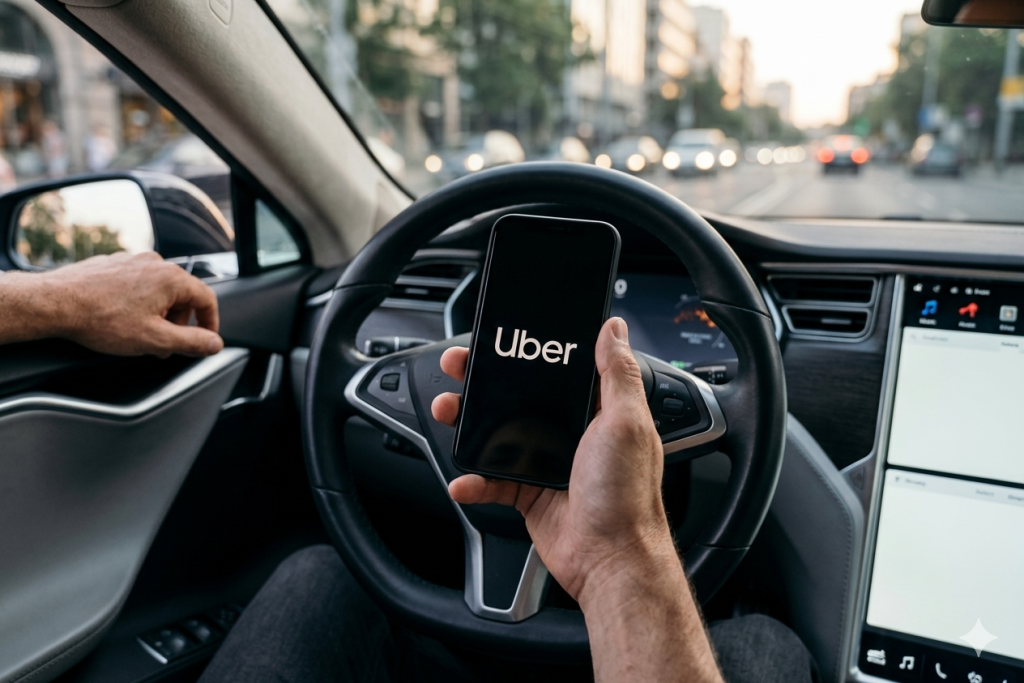
Panama’s app-based transport sector changed significantly on April 16, 2026, when the government published Executive Decree No. 10. The new rule places services requested through apps such as Uber under the “Taxi de Lujo” category and brings them under direct oversight by the ATTT. Within 48 hours, the decree had already triggered public criticism, caution from the platforms, and a presidential review meeting scheduled for the following Monday.
What the new decree does
The decree formally regulates luxury public transport requested through information and communication technologies. It says these services can be paid electronically or in cash, but they must now operate under ATTT registration, control, supervision, and enforcement.
It also changes who is responsible for providing the service. Under the new framework, platforms such as Uber are treated as technology intermediaries, while the actual transport service must be provided through authorized transport organizations, known as prestatarias. The decree also says platforms cannot directly acquire or manage vehicle fleets for this service.
New requirements for drivers and vehicles
The new rules are more detailed than the earlier framework. Drivers must be Panamanian, hold an E1 driver’s license, have backing from an authorized transport organization, present a paz y salvo and minor infractions history, and provide a police record showing no criminal sanctions in the last 10 years.
Vehicles must meet a number of conditions as well. They must have a Taxi de Lujo operating certificate, be in good physical and mechanical condition, have air conditioning and seat belts, carry the relevant insurance including passenger coverage, and be no more than seven years old when entering service. They must also display official markings and identification.
Why this is different from the 2017 model
The government is not just updating paperwork. It is replacing the operating logic of the old system. The 2017 decree recognized app-based luxury transport, but the 2026 decree goes further by moving core control toward the state and authorized transport operators. It also explicitly repeals Decree 331 of 2017.
That older system had already been weakened by court rulings. According to recent reporting and court references cited in coverage, key parts of the 2017 framework were struck down, including restrictions on cash payments and geographic limits on where the service could operate. That left Panama with a partially unsettled model before this new decree arrived.
Why the backlash came so fast
Reaction was immediate because the decree affects everyday mobility. Uber said it is evaluating the new conditions to determine whether Taxi de Lujo operators can be integrated into the Uber app in Panama. The company also said it remains committed to contributing to urban mobility with Uber’s safety standards. inDrive likewise raised concerns about barriers created by the decree.
Panama City Mayor Mayer Mizrachi criticized the measure publicly, saying it punishes innovation rather than modernizing the sector. Business voices also began warning that the rules could affect competition, tourism, and access to practical mobility options that many residents and visitors now use routinely.
Mulino says the decree will be reviewed
The most important recent development is that President José Raúl Mulino has already said he will review the decree after reading the public reaction. He announced a meeting with the ATTT and the Ministry of Government to examine the concerns and stated that the goal is not to harm anyone, but to improve the service with safety.
That is a meaningful point for expats and residents. It suggests the current text may not be the final word, and that the government is at least signaling openness to adjustments rather than locking the system in place immediately.
What is positive here
There are some constructive takeaways. First, Panama is no longer leaving app-based transport in a legal gray area. Second, the decree preserves electronic payments and allows cash payments as well, which matters in a market where users have different payment preferences. Third, the fast political response shows that public pressure is being noticed, which increases the odds of clarification or fine-tuning in the days ahead.
For day-to-day users, especially in areas such as Panama City and Costa del Este, the main issue is not ideology. It is whether the service remains available, practical, and easy to use. Those community links are part of Casa Solution’s Panama site map.
Bottom line
Uber in Panama is not disappearing today, but it is entering a more regulated and more politically contested phase. The new decree is already in force, some of its requirements phase in over three months, the platforms are studying their next move, and the president has opened the door to review. For now, the story is less about a final shutdown or a final victory and more about a fast-moving negotiation over how digital mobility should work in Panama.
Date written: April 19, 2026