


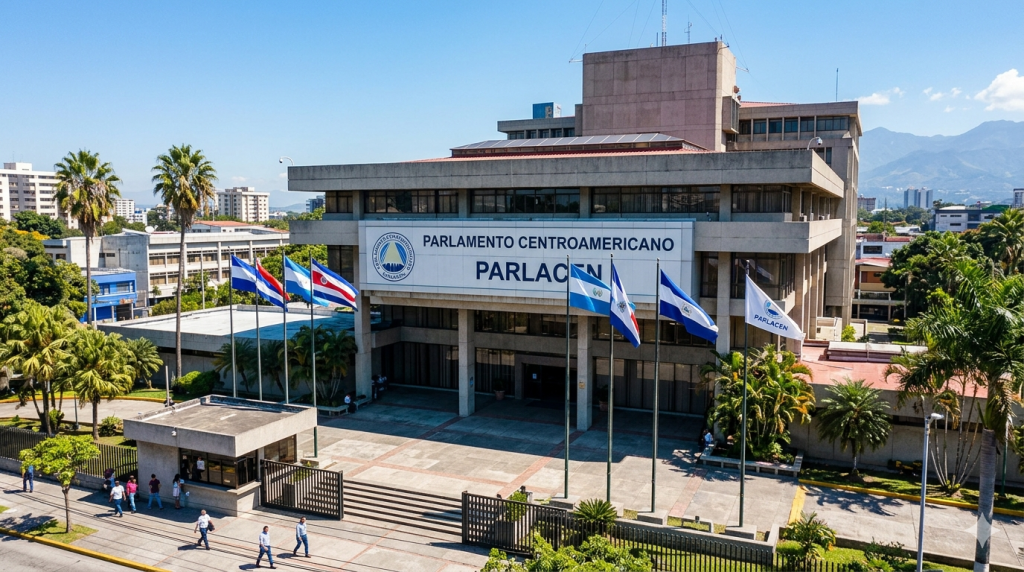
The latest debate over Parlacen in Panama is not really about regional integration. It is about power, legal protection, and public distrust.
That debate resurfaced this week after the PRD formally asked the Central American Parliament, known as Parlacen, to swear in former President Laurentino Cortizo and former Vice President José Gabriel Carrizo. The request came while Carrizo remains under investigation over alleged unjust enrichment tied to a Contraloría audit that prosecutors say found a $1.9 million discrepancy, and after Panama’s Supreme Court had already rejected his attempt to invoke Parlacen immunity in that case.
What Parlacen actually is
Parlacen is a regional political body within the Central American integration system. Under its constitutive treaty, each member state sends 20 elected deputies. The treaty also says former heads of state and government, and former vice presidents or presidential designates, become members when their terms end, unless they renounce that status.
That automatic entry is one reason the institution keeps showing up in Panamanian politics. Former presidents and vice presidents do not need to campaign for those seats once they leave office. The door is already open by treaty.
Why the institution is so controversial
The real source of controversy is immunity.
Parlacen’s treaty gives its deputies the same immunities and privileges they would have as legislators in their home country, and in other member states it grants protections comparable to those of diplomatic agents. The treaty also allows Parlacen to lift those immunities if competent national authorities request it, and says immunity is not absolute in cases of flagrante delicto.
That legal framework has made Parlacen attractive to politicians facing scrutiny, or who expect future scrutiny. Critics have argued for years that the body can function less as a serious regional parliament and more as a political refuge. Transparency International’s Central American chapters made that criticism explicitly in 2015 when former Panamanian President Ricardo Martinelli sought protection through Parlacen.
Has it really been used to avoid prosecution?
Yes, at least politically and strategically. But not always successfully.
Martinelli’s case is the clearest Panamanian example. After leaving office, he turned to Parlacen while corruption investigations were opening against him. Yet his immunity did not permanently stop the process. Panama’s Electoral Tribunal later removed his immunity, allowing the Supreme Court to continue investigating.
That history matters now. It shows why many Panamanians assume Parlacen is a shield, but it also shows the shield is imperfect. Membership can complicate procedure, slow cases, and raise jurisdictional fights. It does not automatically erase criminal exposure.
Carrizo’s current situation reinforces that point. Earlier this month, Panama’s Supreme Court rejected his warning of unconstitutionality tied to a claimed Parlacen protection, allowing the unjust enrichment case to keep moving. In other words, Panama’s courts have already signaled that simply invoking Parlacen is not enough.
Why Panamanians remain suspicious
Panama’s skepticism toward Parlacen is not new. The country even tried to leave the body in 2009, though regional and later domestic court rulings blocked that path.
More recently, Panama’s electoral reform debate has again focused on Parlacen, including how its deputies are chosen and whether the current structure is democratically defensible. That reform pressure reflects a broader problem: many citizens do not see the body as a high-value regional institution, but as a space with weak accountability and strong political perks.
What this latest episode really means
The PRD says swearing in Cortizo and Carrizo is simply compliance with a treaty obligation, not an attempt to interfere with justice. That argument is legally grounded in the treaty language on automatic membership. But politically, the timing is impossible to separate from Carrizo’s case.
That is why Panamanian politicians keep circling back to Parlacen. It offers status, visibility, and possible procedural protection at the exact moment many public figures become most vulnerable – after leaving office.
So the obsession is not hard to understand. Parlacen sits at the intersection of regional law, political privilege, and judicial risk. And in Panama, that combination almost guarantees suspicion every time a former leader tries to enter.
Article written: April 19, 2026
Meta description: Why are Panamanian politicians so focused on Parlacen? This article explains what the regional body is, why it offers legal and political advantages, and how critics say it has been used to delay or complicate corruption cases.